
According to some experts, over the next few years the beef cattle industry will undergo some of the most dramatic changes in recent history. Greatly increased production costs, economic factors and environmental policies will impact the entire cattle industry, squeezing profits and forcing consolidation from cattle producers to packers.
The bottom line is there will be fewer players in the industry. E.C. Crump intends to be one of those remaining in the game.
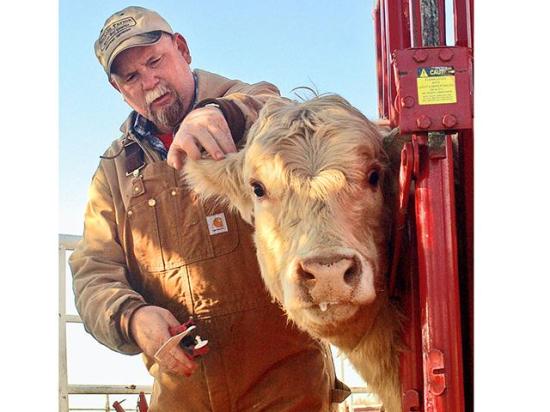
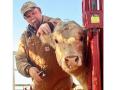
With 400 Angus/Brangus cows at Henrietta, Texas, 20 miles east of Wichita Falls, Crump has outlined a plan he hopes will enable him to survive during a stagnant beef economy. And once economic conditions improve, he believes he will be in the driver's seat to capitalize on new market opportunities.
Crump's strategy relies on the use of high-quality bulls with strong genetics on young, productive females, high conception rates and high weaning weights. He'll keep production costs down by limiting outside labor and maximizing the use of native and improved forages.
Focused for the future. Crump already has a head start. He has participated in the Southwest Standardized Performance Analysis (SPA) program since 2002. According to Stan Bevers, Texas AgriLife Extension Service economist and Texas SPA coordinator, Crump's average annual cow cost is $409, compared to $528, the average for the 56 Texas herds completed since 2003.
According to Cattle-Fax figures, cow/calf producers have enjoyed record prices, with 550-pound calves hovering above $100 per hundredweight for the past four years. Meanwhile, average cow/calf profits remained above $100 per head from 2003 through 2007.
But Randy Blach, Cattle-Fax CEO, cautions profitability for the cow/calf man will be iffy at best this year as fuel, fertilizer and grain prices rise dramatically.
Already, calf prices have trended south as feedlots struggle with negative profitability. Earlier this year, Cattle-Fax projected the average cow/calf profits for 2008 could plunge below $50 per head.
There is nothing to indicate a quick reversal. "Production costs will continue to increase," says Mike Murphy, a market analyst with Cattle-Fax. "We believe cow/calf returns will continue to decline in the next few years." But Murphy notes that some cattlemen always manage to survive, if not thrive, even when the odds are against them.
A Cattle-Fax survey of some 500-plus producers shows that from 1980 to 2007, the top one-third producers with the highest returns reported a per-head return of $91.94, while the lowest one-third showed a $26.81-per-head loss. From 2000 to 2007, the top one-third showed a $172.59-per-head return, while the bottom one-third showed an $83.84-per-head return.
Survival strategy. Crump plans to stay at the top of the pack with a herd of 225 spring-calving cows and 175 fall-calving cows. "There are several advantages to having a split herd," he says. "For one, I can get by with half as many bulls. If I combined the herds, I would have to add six to eight more bulls.
"Also, I have quite a bit of winter grazing—wheat and rye—where I keep my fall-calving cows," he continues. "So I really haven't had to feed those cows very much during the winter. Besides keeping feed costs down, wheat pasture keeps conception rates up, and the calves are heavier than if I kept them on dry grass."
In 2000, Crump began using Angus bulls on Brangus cows and keeping back all his heifers. "My plan was to get my herd young again. So initially in picking bulls, I concentrated on maternal traits, such as fertility and milking ability, while also trying to maintain weight gains," he reports.
"Now I am also putting emphasis on rib-eye area, marbling and other carcass traits," he continues. "If you have a bad steer that won't grade, he'll hurt you once. But if you have a cow that produces poor-grading calves, she'll hurt you every year for 10 to 12 years."
Calves are weaned at eight months, beginning July 8 for the fall-calving cows and Nov. 1 for the spring calvers. In 2006 Crump's spring-calving herd recorded an average of 483 pounds weaned per exposed cow.
The fall-calving herd averaged 552 pounds. The average for the 56 herds from the Southwest SPA database from 2003 to 2006 was 423 pounds per exposed cow.
Rotational grazing. Crump has 5,000 acres of pasture with over half seeded to improved grasses. He practices rotational grazing to maintain the nutritional requirements of his cows and to avoid overgrazing.
The coastal bermuda is the primary summer forage, allowing stockpiling of native grasses for use in fall and winter. The first growth of coastal in select pastures, as well as kleingrass, provides hay for winter feeding and for sale.
Crump uses forages as much as possible for wintering cows. Dry, spring-calving cows and spring-weaned heifers that are being developed for breeding require additional protein. Fall-calving cows and spring calves weaned in November make do primarily on wheat pasture.
"We only feed cubes once every four days," Crump says, adding fewer trips to the pasture saves on fuel costs.
Cows and calves follow a complete vaccination and herd health program. This ensures healthy calves and gives Crump marketing flexibility.
Crump relies on personal labor as much as possible, although he has to hire some part-time help to build and maintain fences, corrals and buildings. His son Zach helps with maintenance, clearing land and seeding grasses. Zach's goal is to one day take over and continue the ranch.